DonsöWater — floating housing infrastructure with a website and automated lead flow
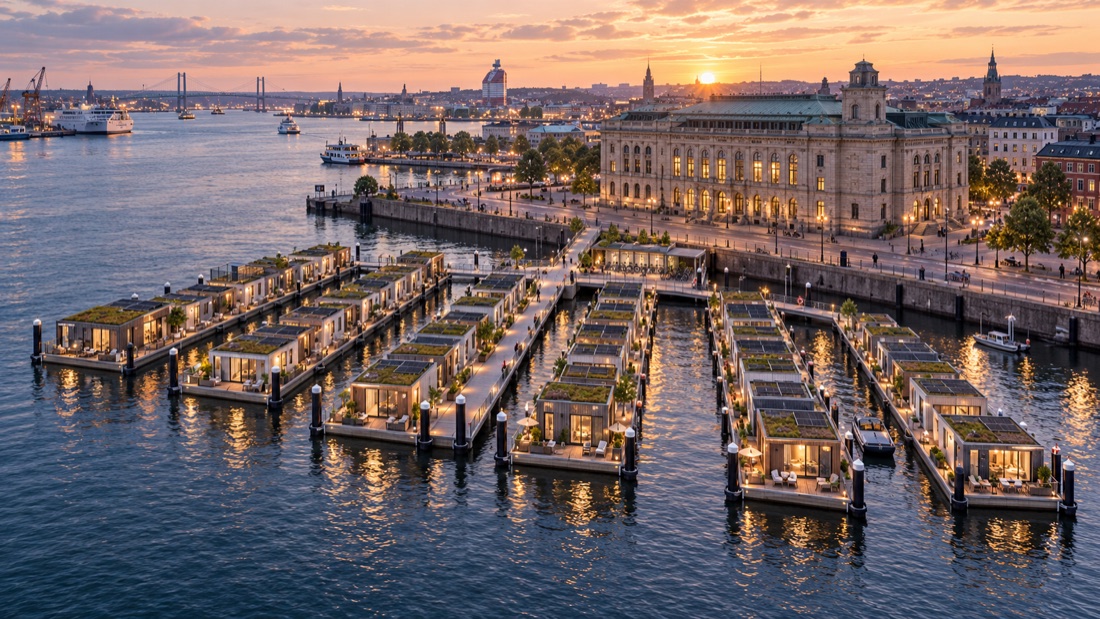
DonsöWater wants to make water buildable — they develop and deliver standardised, floating housing infrastructure for permanent communities on urban water surfaces. Nuvid built their B2B and investor-focused website and set up automated flows for lead handling and feasibility requests, together with multilingual content for Europe and compliance.
Quick overview
In short: DonsöWater is a system integrator for floating residential areas. Nuvid built the website that explains the platform, business model and EU situation, and connected automated flows so that every feasibility request and partner contact is captured, sorted and reaches the right person straight away.
What was included:
- A multilingual website (English and Swedish) for a B2B and investor audience.
- Automated lead and "request a feasibility study" flows with the right information collected from the start.
- Content on Europe, compliance and the business model that carries the conversation forward to qualified partners.
Impact: frees up an estimated 12 hours a week in manual work around incoming requests, sorting and follow-up — time the team instead spends on partners, projects and engineering.
The challenge
DonsöWater is not a construction company but a system integrator for floating residential areas. They design the system architecture, standardise home modules and marine interfaces, and coordinate delivery through specialised partners — while themselves owning the IP and brand. It is a complex story to tell, and it addresses several different groups at once: municipalities and ports, developers and operators, marine engineering firms, and investors, lenders and insurers.
Each such group asks different questions and needs different information. A municipality thinks about the planning process and permits, an investor about the business model and project economics, a partner about their role in the delivery. The challenge was to build a website that holds this breadth together without becoming unclear — while at the same time capturing incoming requests in a structured way, so that a request for a feasibility study does not get stuck in an inbox but reaches the right person with the right information from the outset.
On top of this, DonsöWater works towards a European market. The content needs to exist in both English and Swedish, and it must be able to explain a situation that touches on EU policy, housing shortages and location-dependent compliance — without promising a general European solution that does not exist.
What Nuvid built
Nuvid built DonsöWater's website from the ground up: a B2B and investor-focused site that explains the platform, the flagship project DONSÖ ONE, the business model and the situation in Europe. The structure mirrors how DonsöWater actually works — Platform, DONSÖ ONE, Business Model, Europe & Compliance and Partners — so that every visitor quickly finds their way in.
The core is not just a good-looking site, but the automated flows behind it. We set up a structured "request a feasibility study" flow where every request collects the information needed to assess the next step, instead of an empty contact form. Partner contacts are segmented by role — municipality, developer, engineering firm, investor — so that the right questions are asked immediately and the right person takes over the follow-up. Concretely, this meant:
- A multilingual website (English and Swedish) with a clear structure for each audience.
- An automated feasibility flow that captures, qualifies and routes incoming requests.
- Segmented partner and investor flows that gather the right information from the start.
- Content on the business model, project economics and EU compliance that carries the conversation forward.
We built on top of what DonsöWater already knew about their business — Nuvid provided the website, the automation and the content structure. See more examples under our solutions.
How much time it frees up
We estimate that the automated flows free up around 12 hours a week for DonsöWater. This is an estimate, not a measured figure, and it is tied directly to the automations: lead handling, feasibility requests, multilingual EU and compliance content, and material for investors and partners. Without automation, all of that lands as manual work in an inbox.
The time saving comes from every incoming contact being captured in a structured way instead of being sorted by hand. A request for a feasibility study comes in with the right details already filled in, is segmented by the sender's role and reaches the right person without any intermediary. The multilingual content means the team avoids answering the same basic questions about the platform, business model and EU situation over and over — the site answers first, and the conversation starts further along.
| Manual step | How we solved it | Time freed up |
|---|---|---|
| Sorting and answering incoming requests by hand | An automated lead flow that captures and routes every contact | ~4 hrs/week |
| Gathering information for a feasibility study via back-and-forth email | A structured "request a feasibility study" flow with the right fields from the start | ~3 hrs/week |
| Answering the same basic questions in two languages | Multilingual content on the platform, business model and EU situation | ~3 hrs/week |
| Producing and sending investor and partner material manually | Segmented flows that gather the right information per role | ~2 hrs/week |
The total is an estimate of around 12 hours a week. The point is not the exact figure, but that the work is moved from manual handling to flows that do the heavy lifting — so that the team spends its time on partners, projects and engineering instead.
The technology behind it
The website is built on a bespoke, serverless edge stack, the same foundation we use to keep sites fast, stable and run close to the user. Static pages are delivered via a global network so that the pages load quickly wherever in Europe the visitor is, and the automated flows run as lightweight functions in the same environment.
Running on this stack gives a company like DonsöWater a few concrete advantages: low operating cost, high availability and control over where data is handled — which is relevant when the audience is European and the conversation often touches on compliance. The feasibility and partner flows are built so that every request ends up in the right place and can be followed up, without heavy third-party systems that drive up cost and complexity.
The setup is made to be easy to maintain and build further on. When DonsöWater wants to add a market, a language or a new flow, we build on top of what is already there — the site is a foundation that grows with the business, not a project that locks it in.
Results and next steps
DonsöWater now has a website that carries their whole story — from platform and DONSÖ ONE to business model and the situation in Europe — and that captures incoming requests in a structured way instead of letting them get stuck in an inbox. The feasibility flow means that what DonsöWater themselves call the right first commercial step also becomes a structured first step on the web.
The next step is about building further as DonsöWater moves towards more sites and markets: more languages, more segmented flows and more content that meets each audience where they are. The foundation is in place, and it is made to grow. If you'd like to see what a similar setup would look like for your business, get in touch and we'll look at it together.
Want to see how this looks in practice? Explore our solutions, see more cases and platforms we've built, or get three free suggestions.
How it's built — APIs, automations and infrastructure
For anyone who wants to look under the hood, the setup looks like this — everything sits on a single bespoke, serverless stack, with no heavy third-party systems:
- APIs / endpoints: the lead and feasibility flow goes through a serverless function at
/api/contactthat receives every request from the website and processes it server-side. - Automations: every incoming request is validated and routed automatically to the right alias by role and interest — investors to investment@, developers and feasibility requests to sales@, other partners to partner@. The sender also receives an automatic confirmation, in English or Swedish depending on their choice.
- Infrastructure: the site runs on serverless hosting with serverless functions for the server-side. Data storage is deliberately kept minimal — the function saves nothing itself but sends the request directly to DonsöWater's own inbox, which keeps the GDPR footprint small. A honeypot catches and drops obvious bots.
- Design: a multilingual B2B and investor site that explains the platform, DONSÖ ONE, the business model and Europe and regulation — structured so that each audience finds their way in.
- SEO / GEO: English in the base HTML and Swedish via an i18n layer, structured data (schema/JSON-LD) and security headers — so that both search engines and the European audience are met with the right language and the right compliance content.
- Third-party integrations: the emails are sent via Resend with a scoped send key, with a built-in fallback to mailto if the key is missing — so that the form never becomes a dead end.